
Hiring an Overseas SEO Agency from Canada: Does It Work? Pros, Risks and Questions to Ask

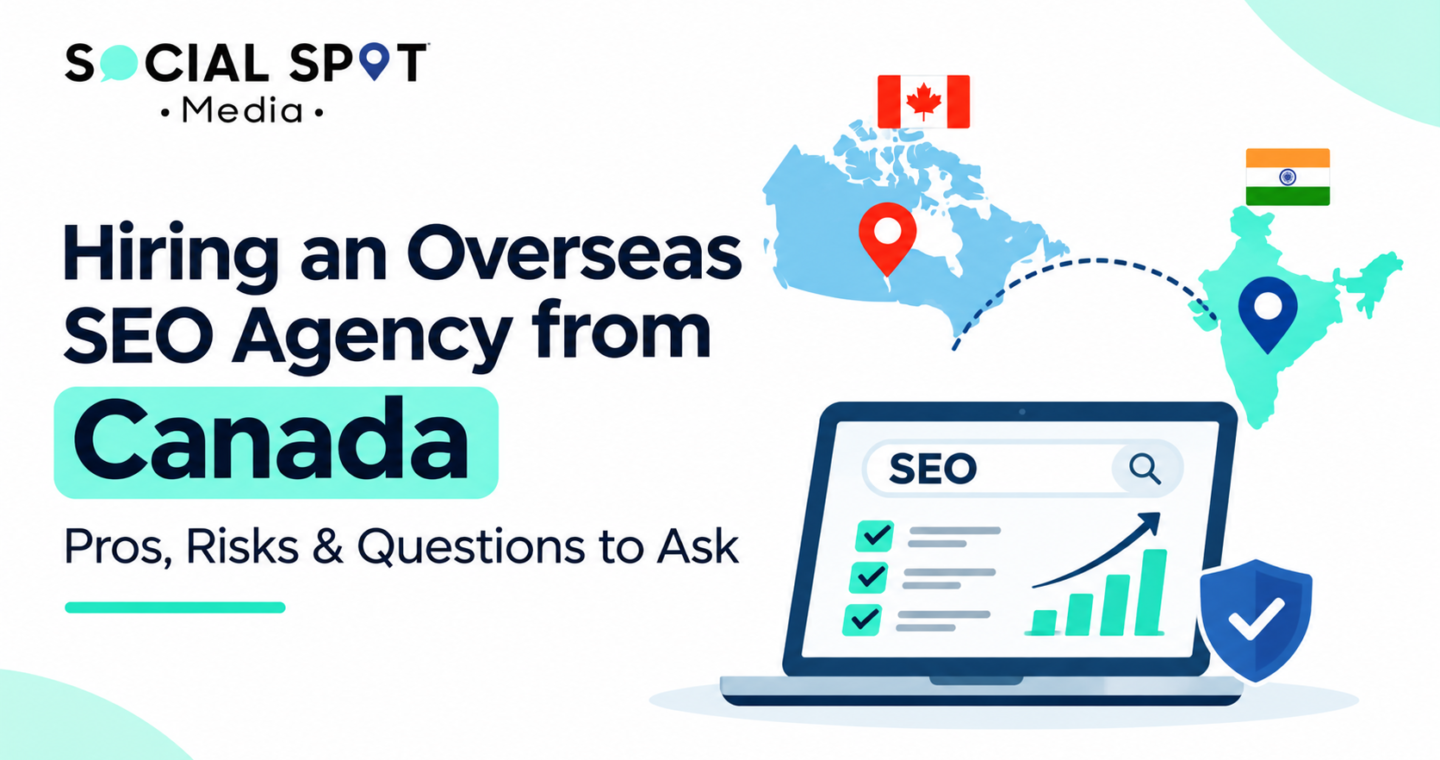
You’ve received an SEO proposal from an agency outside Canada, and the price looks attractive. But you’re wondering whether a team thousands of kilometres away will understand Canadian customers, communicate properly and deliver work you can actually measure.
Yes, hiring an overseas SEO agency from Canada can work, provided the agency understands your target market, follows transparent SEO practices, communicates during agreed hours and gives you full ownership of your accounts. Where an agency operates matters less than how it manages your website, reporting, content and responsibilities.
So the real choice isn’t a cheaper overseas agency versus a more expensive Canadian one. It’s finding a team that can do the work your business needs without creating unnecessary risk.
What Actually Happens When SEO Is Done Remotely?
Many Canadian business owners assume an SEO agency has to be physically in Canada to understand the market. For most of the work, it doesn’t.
SEO happens through online platforms and website access. A specialist can review your site, investigate search performance, update page content, find technical problems and track inquiries without ever visiting your office. Much of the work runs through:
- Google Search Console for impressions, clicks, queries and indexing issues.
- Google Analytics 4 for traffic and conversion tracking.
- Google Business Profile for eligible local businesses.
- WordPress or another CMS for technical and content updates.
- SEO research tools for keyword analysis, competitor research and backlink monitoring.
A team in India can use these platforms with your permission, exactly as a Canadian agency would.
Some parts of SEO do depend on local knowledge, though. Canadian spelling, provincial terminology, local competitors, industry regulations and French-language search behaviour all need proper research and, sometimes, input from people who know the market.
Doesn’t require a Canadian office: technical audits, website optimization, keyword research, analytics, content planning and most reporting.
Benefits from local knowledge: Canadian media relationships, local public relations, community partnerships, regional business networks and location-specific customer insight.
The distinction that matters is between physical location and knowledge of the market.
Where a Canadian Agency Has a Real Advantage
A Canadian agency offers a few things a remote team can’t fully reproduce. How much they matter depends on your industry.
- In-person meetings. If you want to sit down with your marketing team and review campaigns face to face, a local agency is the easier choice.
- Local media relationships. If you’re investing in public relations, sponsorships or journalist outreach, an agency that already knows Canadian publications and organizations has a head start.
- Business-hour availability. A local team can schedule calls during your normal working day with no time-zone juggling.
- Local business networks. An agency familiar with Canadian chambers of commerce, industry associations and regional communities may spot partnership opportunities an overseas team would miss.
If your business depends heavily on local press coverage or community relationships, paying more for a Canadian agency can be well justified.
A local agency isn’t automatically better at technical SEO, just as an overseas agency isn’t automatically better value. Judge the actual people and processes involved.
Where an Overseas SEO Agency Can Be a Good Fit
An overseas agency is a practical option when most of what you need is website work, research, content and performance monitoring. Three areas stand out.
Cost flexibility. Operating costs differ between countries, so an overseas agency may quote a lower fee for a similar scope of technical and content work. Compare deliverables and staff experience rather than assuming a lower quote means better value.
Specialist depth. A remote team may have separate specialists for technical audits, keyword research, content optimization and reporting, which helps when a project needs steady work across several areas.
Technical skill. SEO is more than publishing articles. Site architecture, indexing, structured data, internal linking, analytics and crawl analysis all take specific expertise, and that expertise isn’t tied to any country.
For example, a Canadian company with an established website may need ongoing technical improvements and content optimization rather than in-person marketing support. A remote team can handle that with agreed access and clear reporting.
If you’re thinking about hiring an SEO agency in India, ask to meet the people who will actually manage your account. Don’t decide based on the sales presentation alone.
Overseas SEO Agency vs. Canadian Agency: A Fair Comparison
Neither option is automatically right. Here’s how they compare on the factors that matter in a long-term partnership.
| Factor | Overseas agency | Canadian agency |
|---|---|---|
| Communication | Needs agreed overlapping hours | Usually easier during local hours |
| Cost | Often more flexible | May have higher operating costs |
| Local knowledge | Depends on research and team experience | Often stronger local familiarity |
| Reporting | Can be fully online and transparent | Can be fully online and transparent |
| Contract flexibility | Varies by provider | Varies by provider |
| Risk | Depends on security, quality and processes | Depends on security, quality and processes |
Reporting quality has nothing to do with geography. A good agency explains what it completed, what changed on your website, how many inquiries came from organic search and what it plans to do next month. A vague report from a local agency is no better than a vague report from an overseas one.
Five Risks to Check Before You Sign
The useful question isn’t whether offshore agencies can be trusted in general. It’s whether you can verify how a particular agency operates before giving it access to your business.
1. Time-zone differences
India Standard Time is UTC+5:30. Depending on your province and the time of year, India is roughly 8 to 13.5 hours ahead of Canada. When it’s 9:00 a.m. in Toronto during standard time, it’s 7:30 p.m. in India. When it’s 8:00 a.m. in Vancouver, it’s 9:30 p.m.
That gap is workable, but only if it’s planned. Ask the agency to confirm recurring meeting times in your local time zone, such as a weekly or every-two-weeks call during your morning, rather than relying on occasional email replies.
2. English and French content quality
If you serve customers in Quebec or other French-speaking communities, you may need both English and French content. Ask who writes and reviews it. If the agency offers French SEO, check that native French writers are involved.
A direct translation of an English page rarely works for French-speaking customers. Search terminology, phrasing and cultural context all need attention.
3. Link-building practices
Ask exactly how the agency acquires backlinks. Be cautious if it offers hundreds of links at an unusually low price without explaining the websites, editorial standards or relevance.
Request sample placements and ask whether links are earned through outreach, published on genuine sites or bought. Understand the risks before approving any link-building activity.
4. Ownership of accounts
Your business should own its Google Search Console, Google Analytics 4, Google Business Profile, website hosting and other marketing accounts. The agency should get the access it needs through your accounts.
Avoid any arrangement where the agency creates everything under its own email address and won’t transfer access if you leave.
5. Data and privacy handling
An overseas agency may see website analytics, contact form submissions or other business data. Canadian businesses should consider their obligations under the Personal Information Protection and Electronic Documents Act (PIPEDA), where it applies.
The Office of the Privacy Commissioner of Canada explains that organizations remain responsible for personal information under their control, including information handled by third-party service providers. That means assessing the provider’s safeguards, defining permitted data use and being open about cross-border processing.
If you do business in Quebec, also look at Law 25, the province’s modernized private-sector privacy law, which adds requirements around transferring personal information outside Quebec.
Before sharing customer information, work out what data the agency actually needs, where it’s processed, who can access it and how it’s protected. This isn’t legal advice; a lawyer familiar with your business can confirm which federal and provincial requirements apply to you.
Ten Questions to Ask Any SEO Agency, Local or Overseas
The answers to these will tell you more than any website or sales deck.
- Who will actually manage my account? A good answer names your account manager and the specialists doing the work.
- Who owns my Google accounts and website? You should retain ownership, with the agency given authorized access.
- What will you complete every month? Look for specific deliverables, not “we’ll improve your SEO.”
- How will you research Canadian keywords? The agency should explain how it accounts for provinces, customer intent, competitors and English or French searches.
- How do you build backlinks? Expect an explanation of the outreach process, relevance checks and quality standards.
- How will you report leads? Ask whether calls, form inquiries and other real conversions can be measured, not just rankings and impressions.
- When can we communicate? You should get confirmed meeting hours, a named contact and a clear response process.
- Can I see examples of your actual work? Ask for relevant, verifiable examples.
- What happens if we decide to leave? You should keep access to your website, accounts, content and analytics.
- What will you do if results don’t improve? A good agency explains how it investigates problems, adjusts priorities and communicates setbacks.
Red Flags to Watch For
Walk away, or at least ask for clarification, if you see any of these:
- Guaranteed rankings. Nobody controls Google’s organic results.
- Cheap backlink bundles. Large quantities of links with no stated quality standards create real risk.
- Restricted account access. Your agency should never hold your business accounts hostage.
- Vague monthly reports. “SEO work completed” isn’t enough. You need specific tasks and performance data.
- No named contact person. You should know who’s responsible for your account and who to call when something goes wrong.
What a Well-Run Remote SEO Engagement Looks Like
A good remote engagement has clear responsibilities, predictable communication and reporting you can access yourself. In practice, one account manager coordinates technical SEO, content and off-page work, and schedules calls during your morning. Monthly reports cover organic calls, form inquiries and keyword rankings, along with an explanation of what was done.
Social Spot Media works this way. Its team is based in Noida, India, and schedules calls across Canadian time zones (see how we work). It offers English and French keyword research, with native writers for French content. Clients keep ownership of their websites, Google accounts, advertising accounts and content, and SEO packages start at USD 499 per month.
To be upfront: Social Spot Media doesn’t have a Canadian office. You can read more about its approach on the SEO company in Canada page, or see results from past clients in its case studies.
Who Should Choose a Local Agency Instead?
An overseas agency isn’t right for every business. A Canadian provider may suit you better if:
- Your marketing depends on frequent face-to-face meetings with the agency.
- You need extensive public relations, journalist relationships or media coverage.
- Your business relies on community partnerships, local events and regional networking.
- Your internal team needs someone on-site during Canadian business hours.
There’s no reason to force a remote arrangement if these make up a large share of your marketing.
A hybrid model also works well: hire a local Canadian consultant for public relations and market strategy, and use a specialist remote team for technical SEO, content and analytics.
How to Make the Right Decision
When you’re weighing an overseas SEO agency for your Canadian business, don’t start by comparing countries or monthly fees. Start by comparing the people, processes and responsibilities behind each proposal.
A reliable agency can explain its work, give you access to reporting, communicate clearly and leave you in control of your business assets. You should feel comfortable asking hard questions about security, ownership and reporting before you sign. If an agency treats those questions as a nuisance, that’s a reason to reconsider.
Frequently Asked Questions
Is it safe to give an overseas agency access to my Google account?
Yes, if access is managed correctly. Keep ownership of the account, give the agency individual user permissions, turn on two-step verification and grant only the access needed for the agreed work.
Do I need a Canadian SEO agency to rank in Canada?
No. An overseas agency can work on Canadian websites and target Canadian search terms remotely. What matters is its understanding of the Canadian market, the quality of its content and how well it executes.
What if the time difference becomes a problem?
Agree on recurring meeting times before you sign. A remote agency should be able to schedule calls during a reasonable part of your Canadian working day instead of expecting you to rearrange your schedule.
How do I know an overseas SEO company is doing real work?
Request a monthly report showing completed tasks, Google Search Console performance, organic calls, form inquiries and ranking changes. Keep access to your website and analytics accounts so you can check the work independently.
Does Social Spot Media bill in USD or CAD?
Social Spot Media quotes in USD. The CAD equivalent changes with the exchange rate and any bank or payment-provider conversion fees.
Final Thoughts: Is It Worth It?
Hiring an overseas SEO agency can be a sensible decision when the agency understands your market, communicates consistently and works transparently. Base the choice on accountability, not geography.
If local relationships and in-person support are central to your business, choose a Canadian agency. If your needs are mainly technical SEO, content and measurable organic growth, a remote team is worth serious consideration.
Next step: Request a free SEO audit from Social Spot Media to see where your website stands today and what work it may need, or get in touch with questions.